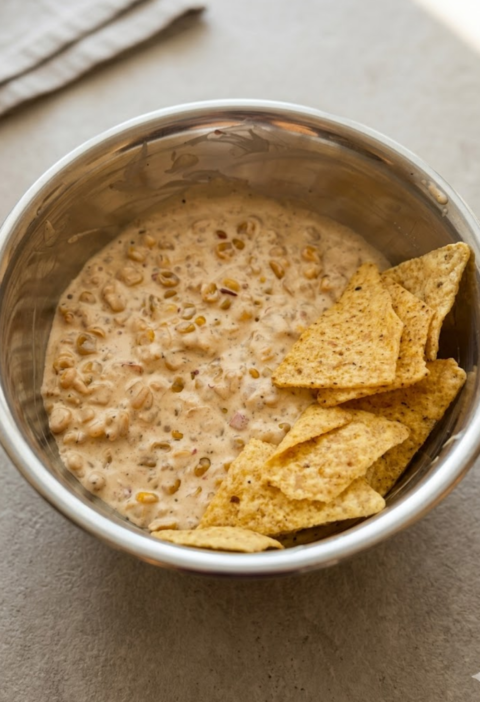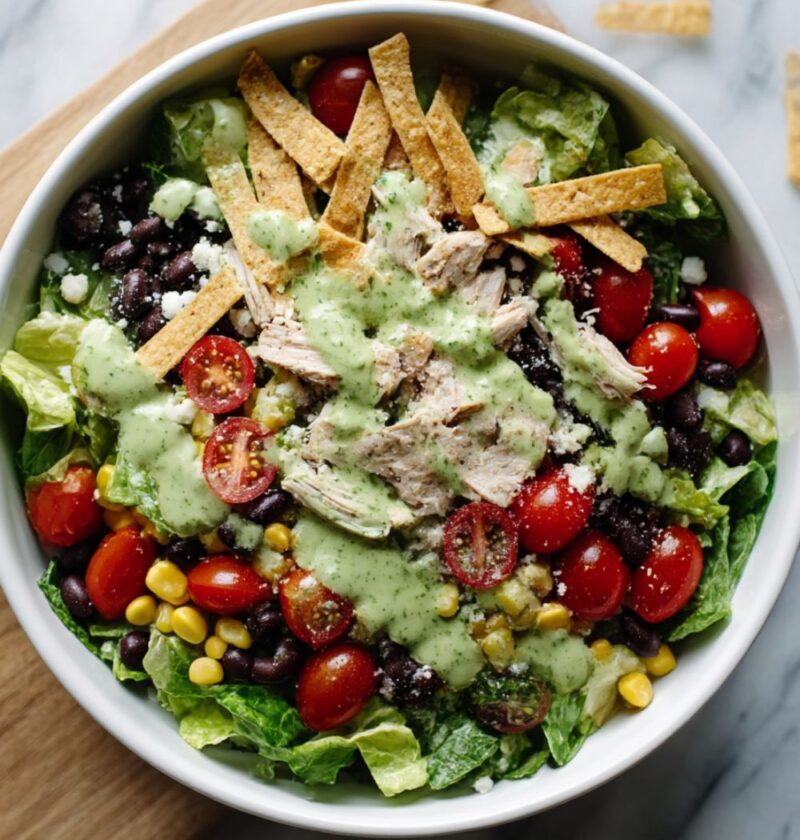
This Trader Joes Cilantro Dressing Recipe is a five-minute blender copycat of the refrigerated bottle that Food Republic ranked the number one Trader Joe’s salad dressing out of everything on those shelves. The original has a flavor you cannot fully explain the first time you taste it — creamy without being heavy, tangy from the lime and rice vinegar, with a fresh cilantro punch and just enough heat from the jalapeño. What separates it from every other green dressing at the grocery store is cotija cheese and toasted pumpkin seeds in the base, two ingredients that most people would never think to blend into a dressing but that give it a subtle saltiness and nuttiness that no amount of herbs alone can replicate.
Most cilantro dressings skip the cheese entirely or use sour cream as the base and end up tasting thin and one-dimensional. The mayonnaise base in this recipe keeps the texture thick enough to cling to romaine or hold up against warm ingredients in a grain bowl without sliding off. The cotija brings a mineral saltiness that you notice more as a background richness than as a distinct cheese flavor. And the pumpkin seeds, once toasted for two minutes in a dry pan, add a nuttiness that rounds out the sharpness of the vinegar and the brightness of the lime. The whole thing blends in under a minute and tastes remarkably close to the bottle from the refrigerator aisle.
Once you have the dressing made it does more than one job. Pour it over a chopped salad with romaine, black beans, corn, and avocado for a Southwestern bowl. Use it as a dip for taquitos or quesadillas. Marinate chicken thighs in it for an hour before grilling — the acid and fat in the dressing work as a proper marinade and the cilantro flavor infuses the meat. Toss it with a bag of shredded coleslaw mix and pile it onto fish tacos. The Trader Joe’s Salad Kit Recipe makes a natural pairing if you want the full salad built out alongside this dressing. For a different style of green sauce from the same Trader Joe’s refrigerator section, the Trader Joe’s Green Goddess Recipe is worth having in the same weekly rotation.
Jump to RecipeTrader Joes Cilantro Dressing Recipe Ingredients
- 1/2 cup fresh cilantro leaves, loosely packed (stems removed)
- 1/4 cup mayonnaise
- 1/3 cup rice vinegar
- 4 tablespoons extra virgin olive oil
- 3 oz cotija cheese, crumbled
- 1 lime, juiced
- 1 garlic clove
- 1 jalapeño, seeds and membrane removed
- 2 tablespoons raw pumpkin seeds (pepitas)
- 1/4 teaspoon ground cumin
- 1/2 teaspoon kosher salt

How To Make Trader Joes Cilantro Dressing
- Prep the ingredients: Wash the cilantro leaves and shake dry or pat with a paper towel. Pull the leaves from the stems and discard the stems — stems add a slightly woody bitterness that is not in the original dressing. Cut the jalapeño in half lengthwise, scrape out all seeds and the white membrane with a spoon, and roughly chop it. Crumble the cotija cheese if it is not pre-crumbled.
- Toast the pumpkin seeds: Add the raw pumpkin seeds to a small dry skillet over medium heat. Toast for 2 to 3 minutes, shaking the pan every 30 seconds, until the seeds turn golden and start to pop. Remove from heat immediately and transfer to a plate to cool for 2 minutes. Toasting deepens the nutty flavor significantly — raw pepitas taste flat by comparison.
- Blend until smooth: Add all ingredients to a blender in this order: rice vinegar, olive oil, mayonnaise, lime juice, cotija cheese, garlic, jalapeño, toasted pumpkin seeds, cilantro, cumin, and salt. Blend on high for 45 to 60 seconds until completely smooth and bright green. Scrape down the sides once halfway through if needed.
- Taste and adjust: Pour a small amount onto a spoon and taste. If it tastes flat, add a pinch more salt. If it lacks brightness, squeeze in a little more lime juice. If you want more heat, add a few jalapeño seeds back in and blend for 10 seconds. The dressing should taste tangy, savory, and fresh — not sweet.
- Chill before serving: Transfer the dressing to an airtight jar or container and refrigerate for at least 20 minutes before using. The cotija cheese thickens the dressing slightly as it cools, which is exactly what happens in the TJ’s bottle. This resting time also lets the flavors meld and the garlic mellow.
- Stir and serve: Give the chilled dressing a good stir before pouring. If it has thickened too much after an overnight chill, whisk in 1 teaspoon of lime juice or cold water until it loosens to a pourable consistency. Drizzle over salads, grain bowls, tacos, or serve as a dip alongside chips and quesadillas.

Recipe Tips
- Use a high-powered blender, not a food processor: A food processor will not fully puree the cotija cheese into the emulsion — you end up with small grainy bits in the texture. A blender runs faster and creates a smooth, creamy consistency. If you only have a food processor, crumble the cotija as finely as possible before adding it.
- Do not skip toasting the pumpkin seeds: Raw pepitas have a mild, slightly grassy taste. Toasted ones develop a deep, nutty roasted flavor that is one of the signatures of the original TJ’s dressing. Two minutes in a dry pan is all it takes and it changes the dressing noticeably.
- Cotija is saltier than feta — taste before adding extra salt: Cotija varies in saltiness depending on the brand. Start with 1/2 teaspoon of kosher salt and taste after blending before adding more. Some batches of cotija alone will provide enough salt to season the whole dressing.
- Adjust heat level by controlling the jalapeño: Removing all seeds and membrane gives you a mild dressing with a faint background warmth — close to the original. Leaving in half the seeds gives medium heat. For a completely mild version, swap the jalapeño for a small amount of roasted Anaheim or Hatch chile instead.
- Make it ahead for better flavor: This dressing tastes significantly better after 2 hours in the fridge than it does right out of the blender. The garlic mellows, the vinegar integrates, and the cotija fully dissolves into the base. If you have time, make it the night before.
What To Serve With Cilantro Dressing
The most obvious use is a Southwestern chopped salad — romaine, black beans, corn, cherry tomatoes, avocado, and shredded chicken with this dressing poured over everything and a handful of tortilla strips on top. It also works as a marinade: coat chicken thighs in the dressing, seal in a zip-lock bag, and refrigerate for 1 to 2 hours before grilling or pan-searing. Tossed with a bag of shredded coleslaw mix, it becomes an instant topping for fish tacos or pulled pork sliders. As a dip it holds up well against warm chips, quesadillas, and taquitos — the thickness from the cotija means it does not go watery at the bottom of the bowl the way thinner dressings do. The Trader Joe’s Enchilada Sauce Recipe fits the same Southwestern dinner theme if you want to build out a full Mexican-inspired spread around this dressing.

How To Store Cilantro Dressing
Store the dressing in an airtight jar or container in the refrigerator for up to 5 days. The cilantro will stay bright green for the first 2 days and then begin to dull slightly — the flavor stays strong even as the color fades. Do not freeze it. Freezing causes the emulsion to break and the cotija to separate into a grainy texture that does not blend back together after thawing. Give the jar a good shake or stir before each use since the dressing will settle and thicken in the fridge. If it is too thick to pour after refrigeration, add 1 teaspoon of lime juice and stir vigorously until it loosens. The dressing also doubles in volume easily — if you are meal prepping for the week, blend a double batch at the start and store in two separate jars.
FAQs
Can I substitute cotija cheese with something else?
Yes. Queso fresco is the closest substitute — it has a similar crumbly texture and mild saltiness but is slightly less tangy than cotija. Feta cheese also works and adds a sharper, brinier note. Parmesan is a distant third option; it blends smoothly but changes the flavor profile noticeably toward Italian rather than Mexican.
Is Trader Joe’s Cilantro Dressing gluten-free?
The original TJ’s Cilantro Salad Dressing does not contain gluten ingredients. This homemade version is naturally gluten-free as written. Always verify the cotija cheese label at your store if you are making this for someone with celiac disease.
Can I use this dressing as a chicken marinade?
Yes — it is one of the best uses. The acid from the rice vinegar and lime juice tenderizes the chicken while the olive oil and cilantro coat the surface and build flavor. Marinate boneless chicken thighs or breasts for 1 to 2 hours in the refrigerator, then grill or pan-sear. Do not reuse the marinade as a dressing after raw chicken has been in it.
Why does my dressing taste bitter?
The most common cause is too much cilantro stem in the blend. The stems have a more intense, sometimes bitter flavor compared to the leaves. Strip the leaves cleanly from the stems before measuring. A second possible cause is blending too long at high speed, which can generate heat and turn the cilantro slightly dark and bitter — keep the blend time under 90 seconds total.
Nutrition
- Calories: 95 kcal
- Fat: 9 g
- Carbohydrates: 2 g
- Protein: 2 g
- Fiber: 0 g
- Sodium: 200 mg

Trader Joes Cilantro Dressing Recipe
4
servings30
minutes40
minutes1
hour10
minutesA five-minute blender copycat of Trader Joe’s Cilantro Salad Dressing made with fresh cilantro, cotija cheese, jalapeño, rice vinegar, and toasted pumpkin seeds. Creamy, tangy, and versatile — ready in 10 minutes.
Ingredients
1/2 cup fresh cilantro leaves, loosely packed (stems removed)
1/4 cup mayonnaise
1/3 cup rice vinegar
4 tablespoons extra virgin olive oil
3 oz cotija cheese, crumbled
1 lime, juiced
1 garlic clove
1 jalapeño, seeds and membrane removed
2 tablespoons raw pumpkin seeds (pepitas)
1/4 teaspoon ground cumin
1/2 teaspoon kosher salt
Directions
- 1. Prep the ingredients: Wash the cilantro leaves and shake dry or pat with a paper towel. Pull the leaves from the stems and discard the stems — stems add a slightly woody bitterness that is not in the original dressing. Cut the jalapeño in half lengthwise, scrape out all seeds and the white membrane with a spoon, and roughly chop it. Crumble the cotija cheese if it is not pre-crumbled.
- 2. Toast the pumpkin seeds: Add the raw pumpkin seeds to a small dry skillet over medium heat. Toast for 2 to 3 minutes, shaking the pan every 30 seconds, until the seeds turn golden and start to pop. Remove from heat immediately and transfer to a plate to cool for 2 minutes. Toasting deepens the nutty flavor significantly — raw pepitas taste flat by comparison.
- 3. Blend until smooth: Add all ingredients to a blender in this order: rice vinegar, olive oil, mayonnaise, lime juice, cotija cheese, garlic, jalapeño, toasted pumpkin seeds, cilantro, cumin, and salt. Blend on high for 45 to 60 seconds until completely smooth and bright green. Scrape down the sides once halfway through if needed.
- 4. Taste and adjust: Pour a small amount onto a spoon and taste. If it tastes flat, add a pinch more salt. If it lacks brightness, squeeze in a little more lime juice. If you want more heat, add a few jalapeño seeds back in and blend for 10 seconds. The dressing should taste tangy, savory, and fresh — not sweet.
- 5. Chill before serving: Transfer the dressing to an airtight jar or container and refrigerate for at least 20 minutes before using. The cotija cheese thickens the dressing slightly as it cools, which is exactly what happens in the TJ’s bottle. This resting time also lets the flavors meld and the garlic mellow.
- 6. Stir and serve: Give the chilled dressing a good stir before pouring. If it has thickened too much after an overnight chill, whisk in 1 teaspoon of lime juice or cold water until it loosens to a pourable consistency. Drizzle over salads, grain bowls, tacos, or serve as a dip alongside chips and quesadillas.